 Musa
MusaThe Fading Roar: Has St. James’ Park Lost Its Magic?
By Luke Edwards
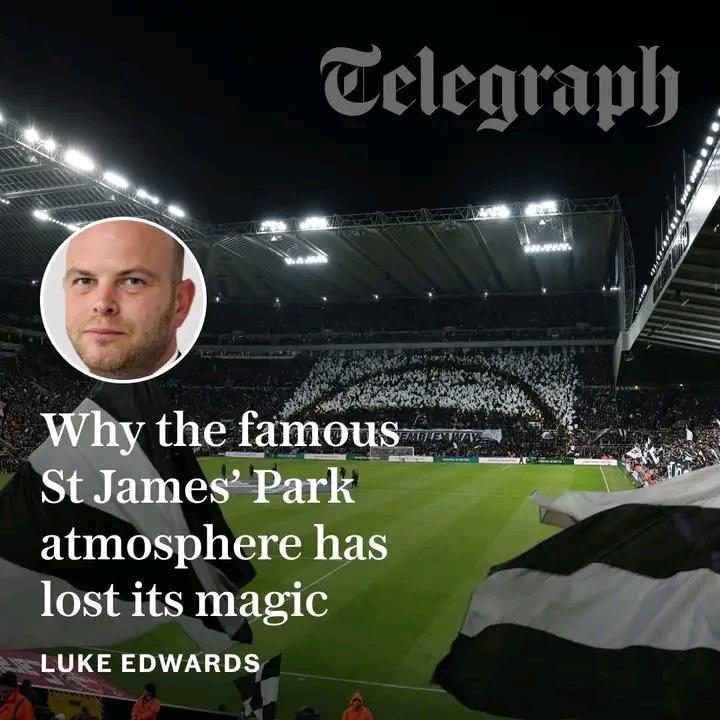
For decades, St. James’ Park was not just a football ground; it was a fortress, a cauldron of noise, and the beating heart of a city. Mention it to those who played there in its heyday, and you’ll hear tales of a palpable, intimidating energy that seemed to suck the ball into the opposition’s net. The Gallowgate End roared, the Sir John Hall Stand swayed, and the whole stadium felt like it was built on a live volcano of passion. Today, however, a growing murmur among the faithful suggests something has changed. The magic, they say, is fading. The question is: why?
As a chronicler of Newcastle United’s modern saga, I’ve witnessed the evolution firsthand. The issues are complex, a cocktail of success, shifting demographics, and the fundamental economics of the modern game.
- The Price of Progress & The Corporate Takeover
The most tangible change is in the stands themselves. The Premier League’s global gold rush has made matchday revenue crucial. Consequently, corporate hospitality has expanded, with lounges and boxes often occupied by clients rather than fanatics. While this funds the signings we cheer, it creates pockets of quietude. The raw, working-class passion that once defined the atmosphere has, in some sections, been diluted by a more tourist-friendly, event-day experience. The lad who’d sing for 90 minutes has been priced out, replaced too often by the spectator who checks his phone at 0-0.
- The Expectation Vortex
There’s a cruel irony here. For 14 years under Mike Ashley, fans weaponised the atmosphere as a protest. The noise was a defiant, angry, unifying force. Now, under ambitious ownership with world-class talent on the pitch, the dynamic has flipped. The desperate hope has become a heavy expectation. Every home game against a “lesser” side comes with a demand not just for victory, but for dominant performance. A misplaced pass or a goalless first half is now met with anxious groans rather than rallying cries. The unconditional support of the underdog has been replaced by the impatient demand of the aspirant giant. This tension can stifle players and quieten crowds.
- The Ticketing Tangle & The “Day-Tripper” Debate
Linked to cost is accessibility. Season ticket waiting lists are miles long, a testament to loyalty, but it also means a generation is locked out. Tickets that do reach general sale are snapped up, often by out-of-town fans or tourists for whom a visit to St. James’ is a bucket-list item. Their contribution to the atmosphere is not guaranteed. They come for the spectacle, not necessarily the strife. Meanwhile, the core, vocal support—the ones who travel to Fulham on a Thursday—are sometimes scattered and drowned out in the bowl. The organic, localised noise from specific stands has been somewhat homogenised and, in the process, diminished.
- The In-Stadium Experience vs. The Armchair Alternative
Modern stadiums, for all their safety and comfort, are designed to manage crowds, not to electrify them. Constant PA announcements, concourse TVs, and even the sheer comfort can neuter the spontaneous fervour. Compare this to the crackling tension of a packed, terraced pit in the 1990s. Furthermore, the ultra-HD, replay-saturated armchair experience has raised the threshold for what constitutes entertainment. If the game isn’t end-to-end perfection, attention wanes.
- The Lost Ritual & The Dispersed Community
The atmosphere wasn’t born at 3pm on a Saturday; it was built in the pubs, the streets, and the queues. Increased security, regulated drinking, and the sanitisation of the matchday “ritual” have compartmentalised the experience. The community that once arrived and sang as one now files in digitally ticketed and segmented. The volcanic eruption of noise that came from a collective, shared journey from pub to turnstile to rabble is harder to generate.
Is All Hope Lost? Absolutely Not.
The raw ingredients remain. Witness the decibel levels against Paris Saint-Germain in the Champions League or the defiant roar in the final minutes against Barcelona in pre-season. The magic is not dead; it’s dormant, waiting for the right catalyst. It flares in Europe, under the lights, in the big moments. The challenge is reproducing that for Wolverhampton on a wet Sunday.
The solution lies in a conscious effort. The club must examine ticketing to better locate and support vocal groups. Fans, for their part, might need to reclaim their role as the relentless 12th man, trading expectation for inspiration. The atmosphere was always a collaboration between team and terrace, a feedback loop of passion. That loop has developed static.
St. James’ Park hasn’t lost its soul. But its famous roar has, at times, become a murmur. Restoring it requires acknowledging that magic isn’t a given—it’s something you have to fiercely, and collectively, protect. Even from the unintended consequences of your own dreams coming true.


 Musa
Musa

 Kwaghterna Garshagu