 Musa
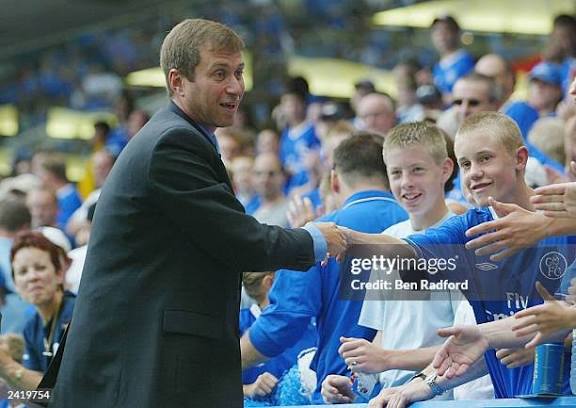
MusaIn the pantheon of Premier League shock stories, this one threatens to blow the roof off the London Stadium. Fresh from the barely believable whispers that once linked him to a Championship side, a new and even more electrifying rumour is gripping the capital: former Chelsea owner Roman Abramovich is being touted as a potential buyer for West Ham United.
If the notion of Abramovich at Leicester seemed bizarre, the idea of the Russian-Israeli oligarch taking the helm at West Ham is positively volcanic. This is a man who spent 19 years building Chelsea into a global juggernaut, turning Stamford Bridge into a fortress of silverware. To cross the great divide of the East End and West London would be the most audacious pivot in football history.
Yet, according to sources that remain as shadowy as the oligarch’s current whereabouts, discussions—or at least exploratory “what if” scenarios—have allegedly taken place regarding the future of the Hammers.
The Allure of the London Stadium
Why West Ham? On the surface, it seems an unlikely match. But for an investor with Abramovich’s apparent desire to re-engage with English football (by proxy if not in person), the Irons present a tantalizing proposition.
West Ham are a sleeping giant with their eyes wide open. They have a massive, passionate fanbase in one of the world’s biggest cities. They have just spent several seasons establishing themselves as a solid Premier League outfit, with a Europa Conference League trophy in 2023 to prove their pedigree. Crucially, they have the London Stadium—a legacy venue from the 2012 Olympics.
While the stadium has been a contentious issue for fans due to its athletics-track setup, it offers something Abramovich always craved at Chelsea: capacity for growth. Stamford Bridge’s redevelopment proved a logistical nightmare, contributing to his decision to sell. The London Stadium, for all its faults, has the space and infrastructure to become a modern colossus with the right investment.
The “Project” Mindset
Abramovich is not a man who buys mid-table stability; he buys potential energy. He doesn’t want a club that is happy to finish 10th; he wants a club that can be forged into a winner. West Ham, with its raw materials, fits that mould far better than many realize.
David Moyes and now Julen Lopetegui have been working with a budget that requires clever management. Abramovich’s modus operandi was different: spend big to win now. For West Ham fans who have grown weary of the “nearly” moments and the sales of star players like Declan Rice, the thought of an Abramovich-funded revolution would be intoxicating. Imagine the Irons suddenly being able to compete with Tottenham, Arsenal, and Chelsea for the league’s top talent. It would flip the power dynamic of London football on its head.
The 800-Pound Gorilla: Chelsea
However, this rumour isn’t just navigating a geopolitical minefield; it’s navigating a tribal one.
Abramovich is the man who bought the league title in 2004. He is the enemy. The man who turned Chelsea from a club West Ham fans loved to beat into a machine they grew to resent. For him to suddenly stand in the directors’ box at the London Stadium, wearing a claret and blue scarf, would be the ultimate betrayal in the eyes of Chelsea supporters and a source of deep, unsettling irony for West Ham fans.
Could the Hammers faithful truly embrace a man whose fortune is directly responsible for two decades of Chelsea dominance? Some would undoubtedly argue that “football is business,” and that his money is as green as anyone else’s. But for the majority, the cultural whiplash would be too severe.
The Sanctions Shadow
Beyond the tribal conflict, the same insurmountable hurdles that dogged the Leicester rumours apply here. Abramovich remains under UK sanctions related to the invasion of Ukraine—sanctions he has consistently challenged. Any direct ownership is impossible.
Therefore, this rumour hinges entirely on a proxy ownership structure. A consortium, fronted by long-time associates of Abramovich, could theoretically pool resources to buy the club from current chairman David Sullivan and his partners. This would allow the money and the strategic vision to be “Abramovich-adjacent” without his name being on any legal documents.
The Premier League, however, is not naive. Their Owners’ and Directors’ Test includes powers to scrutinize the “source of wealth” and any individuals who have “material influence” over a club. If they sniff Abramovich’s hand on the tiller, the deal would be dead in the water. The political backlash against the government would be immense.
A Jaw-Dropping Prospect
For now, this remains the wildest of wild rumours. It exists in the space where fan anxiety meets speculative journalism. West Ham’s current ownership has shown little public indication of wanting to sell, and Abramovich’s camp has remained silent since his forced exit from Chelsea.
But the fact that the rumour persists, shape-shifting from Leicester to West Ham, suggests a truth somewhere in the undergrowth: Roman Abramovich misses English football. And whether it’s through intermediaries, investment funds, or a future lifting of sanctions, the football world is bracing for the possibility that the oligarch’s shadow might once again fall across the Premier League.
For West Ham, it would be a deal that breaks the internet, heals the bank balance, and complicates the soul of the club all at once. From Chelski to the Cockney Boys? In the theatre of the absurd that is modern football finance, never say never.

 Musa
Musa


 Kwaghterna Garshagu