 Musa
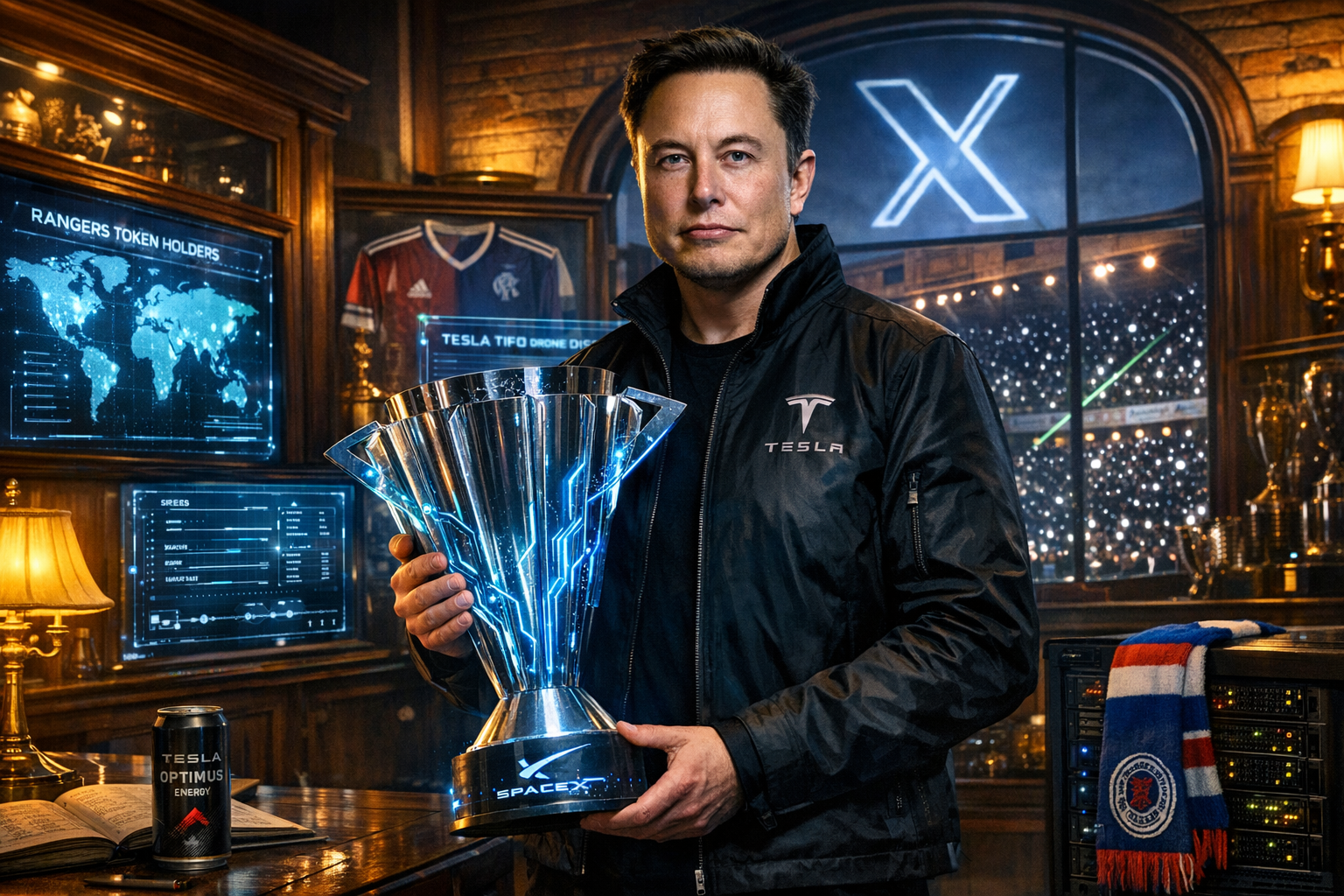
MusaElon’s Blunt Force Takeover: Musk Eyes Rangers and Doesn’t Sugarcoat Why
In a move that has sent shockwaves through the worlds of football finance, tech mogul Elon Musk, via his enigmatic platform ‘Tipping’ (formerly Twitter), has set his sights on a legendary Scottish football institution: Rangers FC. But true to form, the world’s richest man isn’t courting the Ibrox faithful with romantic notions of legacy or tradition. Instead, he’s offering a masterclass in brutal, disruptive honesty.
The saga began not with a formal bid to the Rangers board, but with a series of late-night posts on the site he owns. Amidst discussions about AI, Mars, and meme stocks, Musk mused: “Thinking about buying Rangers. Great global brand, undervalued asset, insane fan passion. Also, Scottish football needs a disruptor. Open to ideas.”
Pandemonium ensued. The club’s share price, where publicly traded, spiked. Fans’ timelines were flooded with mock-ups of Tesla-kit hybrids and jokes about a SpaceX-sponsored spaceport at the Copland Road end. But the real insight came when pressed by users on his motives.
The Musk Doctrine: No Fluff, Just Fundamentals
When asked if he was a lifelong Gers fan, Musk was dismissive: “Fan sentiment is a powerful data point. But this is not about nostalgia. It’s about scalability.” He proceeded to break down his reasoning with the cold precision of an engineer assessing a faltering machine:
· On the Business: “Rangers is a top-200 global sports brand operating with a top-500 revenue model. That’s an inefficiency. The commercial potential is trapped in legacy structures. We would fix that.”
· On the Competition: “The Old Firm dynamic is one of the world’s most intense derbies. It’s a perpetual motion engine of engagement. But it’s being monetized like a local rivalry. That’s illogical.”
· On Technology: “Stadium experience is 20 years behind. Ticketing, concessions, fan engagement—all solvable with simple software. Imagine real-time analytics, crypto-integrated loyalty tokens, and AI-driven talent scouting for a fraction of EPL prices.”
· On the Honest Pain Point: “The club’s history is an asset. Its recent financial history is a case study in mismanagement. I buy broken things and make them work.”
The Ibrox Reaction: Delirium Meets Discomfort
The Rangers support, still healing from a decade of turmoil, is divided. A significant cohort is electrified. The prospect of Musk’s bottomless wealth and innovative mind breaking Celtic’s domestic dominance and propelling Rangers back into the European elite is a seductive dream.
“He’s not here to be a custodian; he’s here to be a conqueror,” read one popular fan forum post. “We’ve had spivs and charlatans. Give me a brutal genius who gets things done.”
Yet, others are deeply uneasy. Musk’s mercurial nature, his propensity for chaotic communication, and his history of upending traditions strike fear into the heart of a club built on them. “We’re not a tech startup to be ‘disrupted’,” cautioned a veteran fan group. “We’re a community institution. Will he understand what it means when we sing ‘Follow Follow’?”
The Scottish football establishment watches with a mix of awe and dread. The Scottish Premiership, with its predictable revenue streams, is ill-prepared for a club backed by a man who casually upends entire industries. The financial gap could become a chasm overnight.
The Verdict: A Future Built on Truth, Not Tradition?
Elon Musk’s potential purchase of Rangers is more than a sports story. It’s a collision of cultures: Silicon Valley’s “move fast and break things” ethos meeting the deep, emotional conservatism of European football.
He isn’t offering the comforting lies of a sugar-daddy owner promising endless funds with no strings. He’s offering a stark partnership: his capital and disruptive genius in exchange for total control and a mandate to reinvent. He’s laid bare his view that Rangers, for all its glory, is an under-optimized business—a statement many find crass, but few can convincingly argue is entirely false.
Whether this deal moves beyond social media speculation remains to be seen. Regulatory hurdles, boardroom politics, and the sheer complexity of football will be formidable opponents. But one thing is already clear: Elon Musk has brought his trademark brutal honesty to Ibrox. And in doing so, he has forced everyone—fans, rivals, and pundits—to ask an uncomfortable question.
Is football a sacred tradition to be preserved, or is it, at its elite level, merely another inefficient system waiting for the right disruptor to come along and rewrite the rules? For better or worse, Musk has tipped his hand. And Scottish football may never be the same again.

 Musa
Musa