 Musa
MusaAston Villa’s ambitions under Unai Emery show no signs of abating. Having secured a historic return to the Champions League, the club’s gaze is fixed on acquiring the calibre of player to thrive on that grand stage. The latest name to ignite the rumour mill is Barcelona’s versatile forward, Ferran Torres—a target reportedly of “strong interest” from Villa Park. This potential move invites a fascinating, if unconventional, comparison: not to a silky playmaker of yore, but to a club legend who embodied grit, power, and a relentless will to win: Dion Dublin.
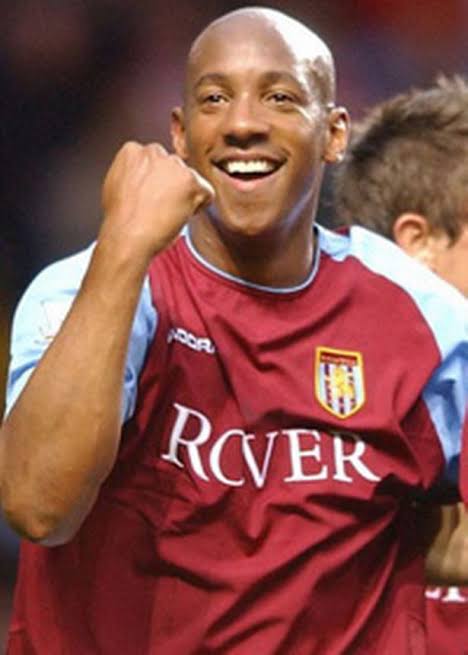
At first glance, the comparison seems incongruous. Dublin, the archetypal British centre-forward of the 1990s, was a force of nature. His game was built on thunderous headers, fearless hold-up play, and an uncanny knack for being in the right place inside the six-yard box. His iconic 1998/99 season, where he formed a devastating partnership with a young Gareth Southgate and shared the Premier League Golden Boot with Michael Owen and Dwight Yorke, is etched in Villa folklore. Dublin was the ultimate penalty box predator, a leader whose physicality and passion made him the heartbeat of the team.
Ferran Torres, by contrast, is a product of the modern, multi-faceted attacking school. While capable of leading the line, he is more a creature of the channels—a winger converted into a forward, prized for his intelligent movement, technical fluidity, and ability to link play. His goalscoring record (24 goals in 102 appearances for Barcelona) is respectable but not explosive, yet his value to Emery could lie in his versatility and tactical IQ. He can operate across the front three, press with intensity, and combine intricately in the final third—attributes tailor-made for Emery’s detailed, system-based approach.
So where does the parallel lie? It is found not in their playing style, but in their potential significance and symbolic fit.
The Modern “Utility Forward” vs. The Classic “Number 9”
Dublin’s versatility was ahead of its time—he could,and did, play centre-back in a crisis. Torres’s versatility is of a different order: he is an attacking chameleon, a puzzle piece that can fit multiple slots in Emery’s tactical diagram. Where Dublin offered a physical solution in different roles, Torres offers a technical and tactical one. Both, however, provide a manager with invaluable flexibility.
The Winning Mentality
Dublin arrived at Villa with a point to prove and the experience of winning a Premier League title with Manchester United.He brought a standard, a toughness, and a professionalism that elevated those around him. Torres, while younger, arrives (if the deal materialises) from the relentless pressure-cooker of Barcelona, having played under Pep Guardiola and won major trophies with Manchester City and Spain. He understands the mentality required at the summit of the game—a precious commodity for a Villa squad stepping into the Champions League spotlight.
The System Fit
Dublin was the perfect focal point for the direct,crossing-based football of John Gregory’s Villa. He was the system’s definitive weapon. For Emery, Torres could be the perfect fluid component. In a side that prizes control and verticality, his ability to drift, create space for Ollie Watkins, and provide a clinical option from wide areas could be transformative. He wouldn’t replace Watkins, but could form a more dynamic, interchanging partnership than the classic “big man-little man” duo Dublin was part of.
The interest in Ferran Torres signals Aston Villa’s evolution. They are no longer shopping for a straightforward successor to a legend like Dublin; the game has changed, and so has the club’s model. They are shopping for a specific profile to execute a sophisticated modern vision.
Yet, the ghost of Dion Dublin reminds us of the intangible essentials that transcend any era: courage, adaptability, and the heart to carry the hopes of a fervent fanbase. If Ferran Torres does make the move from the Camp Nou to Villa Park, his success won’t be measured by how many towering headers he scores, but by whether he can, in his own way, capture that same winning essence and write his own chapter in Villa’s ever-unfolding story. He wouldn’t be the next Dion Dublin, but he could very well become the first Ferran Torres—a symbol of Villa’s bold new era, just as Dublin was of a glorious past one.


 Musa
Musa

 Kwaghterna Garshagu