 Musa
MusaMartin O’Neill’s Unbreakable Rule: Total Commitment or Face the Consequences
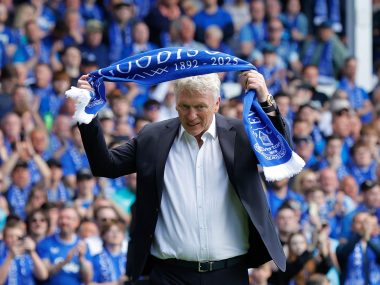
In the tumultuous world of football management, where player power often clashes with managerial authority, the most successful leaders establish non-negotiable principles. For Martin O’Neill, the 73-year-old currently steering Celtic for a second time, that foundational rule is absolute, non-negotiable commitment. His recent interim return to Celtic Park has starkly highlighted his philosophy: every player must be willing to run until they drop for the cause, or they will be dropped from the team.
⚫ The Foundation: “Well Done, Son” and the Pursuit of Approval
O’Neill’s management style is built on a core motivational principle he learned under the legendary Brian Clough at Nottingham Forest: the immense value of sincere, hard-earned praise. As O’Neill has explained, hearing “well done, son” from Clough was a rare and powerful motivator. He carried this into his own career, aiming to strike a critical balance.
O’Neill’s Managerial Philosophy:
· Primary Goal: Create an environment where players feel valued and can flourish.
· Key Method: Use sincere praise to build trust, so criticism is accepted when necessary.
· Non-Negotiable: Players must give “absolutely everything they have to get his approval”.
This creates a powerful dynamic. Players are not just following tactical instructions; they are striving to earn the manager’s respect—a respect that is withheld from those who do not meet the standard of total effort.
⚫ The Celtic Application: Immediate Consequences for Non-Compliance
O’Neill’s current interim stint at Celtic provides the clearest, most recent evidence of this rule in action. He inherited a squad widely viewed as lacking quality and direction after a chaotic period for the club. His response was not complex tactical overhauls but an immediate enforcement of his core principle.
· Exiling the “Risible Recruitment”: For a crucial Europa League match against Feyenoord, O’Neill’s starting XI contained none of the players signed for millions of pounds in the preceding summer transfer window. He publicly highlighted the “lack of quality” and “poverty of choice,” effectively sidelining expensive signings like £5 million forward Michel-Ange Balikwisha because they did not meet the required standard of commitment or effectiveness.
· Proving the Point: By omitting these signings and selecting players he trusted to fight, O’Neill’s team secured a memorable 2-1 away victory in Rotterdam. The consequence for non-compliance was swift and clear: exclusion from the team, regardless of transfer fee or reputation.
⚫ A Career-Defining Pattern, from Leicester to International Duty
This is not a new tactic for O’Neill but the consistent thread of a decades-long career.
· Leicester City (1995-2000): He took over a second-tier team with a disgruntled fanbase and facing a dressing-room mutiny. By instilling his ethos, he transformed them into a cohesive unit that achieved multiple top-10 Premier League finishes and won two League Cups. He made players believe they could achieve the impossible, exemplified by scoring a last-gasp equalizer against a Dennis Bergkamp-inspired Arsenal in 1997, leaving the Dutch master “shaking his head in disbelief”.
· Aston Villa (2006-2010): He convinced a disillusioned Gareth Barry to stay by restoring his hunger and ambition, leading to Barry’s England recall within six months. O’Neill built a formidable counter-attacking team around pace, commitment, and players who would “run until they drop,” like James McClean.
· Republic of Ireland (2013-2018): With a squad often lacking in technical stars, O’Neill’s Ireland qualified for Euro 2016 and reached a World Cup play-off by maximizing the one attribute he could control: sheer effort. He demanded “total concentration” from his players, even instructing those involved in transfer speculation to settle their futures before joining up with the squad to avoid any distraction.
⚫ Why the Rule Works: Beyond Tactics to Identity
O’Neill’s success with this rule stems from its clarity and fairness. It transcends tactical systems—he has successfully used 3-5-2 and 4-4-2 formations—and creates a unifying team identity. In an era of high player turnover and commercial influence, his demand for total commitment provides a stable, understandable code.
As one observer noted, O’Neill has the “precious and rare gift” of making players want to give everything for his approval. This gift forged European Cup winners at Nottingham Forest, delivered trophies at Celtic and Leicester, and allowed limited international teams to punch above their weight.
For Martin O’Neill, the rule is simple: the jersey and the collective cause are non-negotiable. Any player unwilling to fully commit to that bargain faces the ultimate consequence—being left out, as Celtic’s summer signings recently discovered. In a sport often overcomplicated by data and diplomacy, O’Neill’s enduring power lies in this fundamental, unbreakable demand.
I hope this article provides the insight you were looking for. If you are interested in how O’Neill’s current second stint at Celtic compares to his first trophy-laden period in the early 2000s, I can provide more details on that.


 Musa
Musa