 Musa
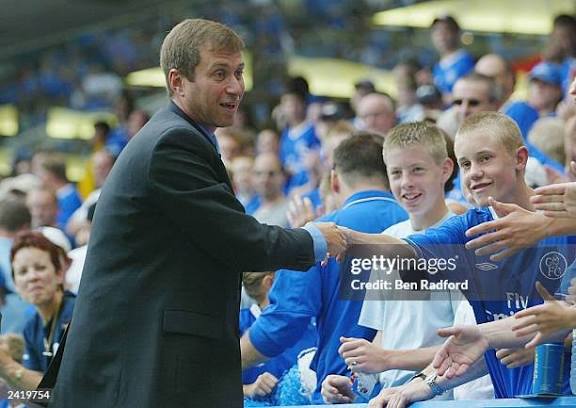
MusaThe rumour mill has churned out some astonishing tales over the years, but this one feels different. Hot on the heels of whispers linking the former Chelsea oligarch to Leicester City and West Ham United, a new name has entered the chat: Everton.
Yes, Everton. The grand old lady of Goodison Park. The club currently navigating the final, bittersweet months in their historic home before moving to a brand-new stadium on the banks of the Mersey. The idea of Roman Abramovich—the man who bankrolled Chelsea’s modern dominance—pitching up on Merseyside is being touted in certain football finance circles, and it is a revelation that has left the blue half of Liverpool utterly gobsmacked.
If the Leicester link was bizarre and the West Ham prospect was tribal dynamite, this is something else entirely. This is the stuff of fever dreams. But as the saying goes, in football, never say never.
The Bramley-Moore Dock Factor
Let’s start with the obvious lure: the stadium. Everton are in the final stages of constructing their stunning new home at Bramley-Moore Dock. It is a cathedral of modern football, a waterfront arena designed to catapult Everton into a new era. For any potential investor, it is the crown jewel.
For Abramovich, who spent nearly two decades at Chelsea frustrated by the inability to redevelop Stamford Bridge, a ready-made, world-class stadium is the ultimate temptation. He knows better than anyone that infrastructure wins in the long run. Buying Everton now would mean acquiring a Premier League-ready club with a stadium that can generate revenue on par with the very best in the country. It is, in many ways, a more attractive asset than Chelsea was when he bought it in 2003.
The Price is Right?
Everton’s current ownership situation is, to put it mildly, complicated. Majority shareholder Farhad Moshiri has been actively seeking new investment or a full sale for some time. The club has navigated financial fair play storms, survived two separate points deductions last season, and is desperate for stability.
The asking price for Everton, even with the new stadium, is likely to be significantly less than the £4.25 billion Todd Boehly’s consortium paid for Chelsea. For a man with Abramovich’s estimated £9 billion fortune (trapped though much of it may be), Everton represents a value proposition. It is a distressed asset with unlimited potential—exactly the kind of project that might intrigue a man who built a empire from nothing.
Furthermore, unlike the fierce tribal rivalries of London, Merseyside offers a clean slate. Abramovich has no history with Liverpool FC. He would not be crossing a divide in the same way he would at West Ham. He would simply be the man who bought Everton.
The Geopolitical Hurdle
However, as with every Abramovich-related rumour, we must return to reality. The sanctions imposed on him by the UK government following the invasion of Ukraine remain firmly in place. He cannot own a British company. He cannot have a bank account in the UK. For him to walk into Goodison Park tomorrow and buy the club is legally impossible.
The only route would be via proxies. A consortium fronted by associates, with funding sourced from outside the sanctioned jurisdictions. This is the grey area where these rumours thrive. The Premier League’s Owners’ and Directors’ Test would face its toughest examination yet. They would have to determine who truly controls the club. If there is any suggestion that Abramovich is pulling the strings from afar, the deal would be rejected outright.
What Would It Mean for Everton?
For Evertonians, the reaction would be a maelstrom of emotions. On one hand, this is a club that has suffered years of near-misses, financial anxiety, and relegation scares. The prospect of Abramovich-level wealth—the kind that buys players like Didier Drogba and Michael Essien in their prime—would guarantee not just survival, but a seat at the top table.
Sean Dyche, working miracles with a shoestring budget, would suddenly have the resources to build a squad capable of challenging for Europe. The new stadium would be filled with stars. The “People’s Club” would become the “Powerhouse Club.”
On the other hand, there is the identity question. Everton prides itself on its community spirit, its working-class roots, and its unique place in English football history. Aligning with a figure as controversial as Abramovich would be a reputational gamble. The club would become a political talking point. The flags of “Blue Union” and “NSPCC” that fly so proudly at Goodison would be replaced by questions in Parliament.
The Liverpool Factor
And then there is the small matter of the other lot across the park. Liverpool Football Club, under Fenway Sports Group, have their own financial muscle. But an Abramovich-funded Everton would shift the balance of power on Merseyside in a way not seen since the 1980s. The blue half would finally have the financial firepower to go toe-to-toe with the reds in the transfer market. The Merseyside derby, already one of the fiercest in world football, would become a gladiatorial contest of financial titans.
Verdict: A Bridge Too Far?
Is this actually going to happen? Almost certainly not. The political barriers are too high, the scrutiny too intense, and the current climate too volatile. But the fact that the rumour has legs—that it has moved from Leicester to West Ham to Everton—suggests that something is stirring in the shadows.
Perhaps it is simply the football world speculating on what Abramovich will do next. Perhaps it is intermediaries testing the waters. Or perhaps, just perhaps, the man who changed English football once is plotting the most audacious comeback of them all.
For Everton, a club on the cusp of a new beginning, the arrival of Roman Abramovich would be the ultimate gamble: a chance to win the biggest prize, at the cost of everything they hold dear. It is a jaw-dropping revelation, and for now, that is exactly where it belongs—in the realm of the jaw-dropping.

 Musa
Musa